BEGIN:VCALENDAR
VERSION:2.0
CALSCALE:GREGORIAN
METHOD:PUBLISH
PRODID://CTSL//204032
BEGIN:VEVENT
DTSTAMP:20260530T061323
VTIMEZONE:America/Los_Angeles
DTSTART:20260116T200000Z
DTEND:20260116T210000Z
UID:204032
SUMMARY:Using Spoken Corpora to Teach Pronunciation (TOP-IG)
LOCATION:CATESOL Zoom
DESCRIPTION:Using Spoken Corpora to Teach Pronunciation (TOP-IG)\n\n01/16/26 12:00 PM PST\n - 01/16/26 01:00 PM PST\Description:\n\nUsing Spoken Corpora to Teach Pronunciation\n\nExploring Prominence, Pausing, and Information Structure with CoTACS\nThis webinar explores how spoken corpus data can inform and enhance pronunciation teaching. Using the Corpus of Teaching Assistant Classroom Speech (CoTACS), the session demonstrates how audio excerpts can be used along with transcriptions and visualized annotations to teach prosodic features of English. Participants will be introduced to classroom activities targeting both perception and production, with a focus on prominence, pausing, and information structure. These activities support discussions of how prosodic patterns—such as placing prominence on new information and marking given information as non-prominent—can influence speaker intelligibility and listener comprehension. The session will also provide step-by-step guidelines for designing additional corpus-based tasks, enabling teachers to develop new activities for a range of pronunciation features and instructional goals.\n\nBy the end of this webinar, participants will be able to:\n\n Identify key prosodic features (prominence, pausing, information structure) in spoken corpus data.\n Use audio recordings, transcripts, and annotations from CoTACS to design pronunciation lessons.\n Implement perception and production activities that highlight prosodic patterns and their role in intelligibility.\n Explain how new vs. given information affects prominence patterns in classroom discourse.\n Develop customized, corpus-based tasks to target additional pronunciation features aligned with specific teaching goals.\n\n\nPresenter\n\nIdée Edalatishams works at the intersection of corpus linguistics and pronunciation, focusing on L2 speech and multilingual speakers’ intelligibility. She earned her PhD in Applied Linguistics and Technology from Iowa State University, where she developed the Corpus of Teaching Assistant Classroom Speech (CoTACS) to examine prosodic features in academic spoken English. Her research has also addressed learner identities, ITA speech, and the use of ASR tools for pronunciation practice. She has supported multilingual learners’ oral and written communication at George Mason University and Iowa State University and has taught composition and ESL/EFL courses in the United States and Iran.\n\nHosts\n\nTeaching of Pronunciation Interest Group (TOP-IG)\nMarsha Chan and Patryk Mrozek. Co-coordinators\nDonna Brinton, Assistant Coordinator\n\nModerator\n\nPatryk Mrozek\n\nDate and Time\n\nFriday, January 16, 2026, 12:00 -1:00 PM California Time \n\nCost\n\nMembers: Free\nNon-members: $5.00\n\n#catesoltop\n\Location:\nCATESOL Zoom\n\n,
X-ALT-DESC;FMTTYPE=text/html:Using Spoken Corpora to Teach Pronunciation (TOP-IG)
01/16/26 12:00 PM PST - 01/16/26 01:00 PM PST
Description:
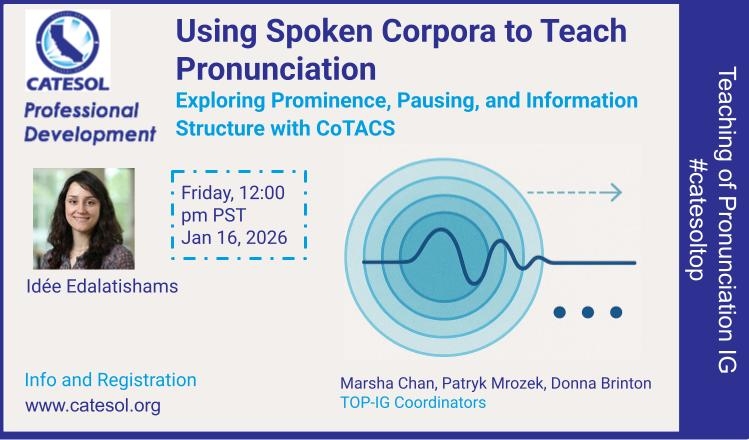
Using Spoken Corpora to Teach Pronunciation
Exploring Prominence, Pausing, and Information Structure with CoTACS
This webinar explores how spoken corpus data can inform and enhance pronunciation teaching. Using the Corpus of Teaching Assistant Classroom Speech (CoTACS), the session demonstrates how audio excerpts can be used along with transcriptions and visualized annotations to teach prosodic features of English. Participants will be introduced to classroom activities targeting both perception and production, with a focus on prominence, pausing, and information structure. These activities support discussions of how prosodic patterns—such as placing prominence on new information and marking given information as non-prominent—can influence speaker intelligibility and listener comprehension. The session will also provide step-by-step guidelines for designing additional corpus-based tasks, enabling teachers to develop new activities for a range of pronunciation features and instructional goals.
By the end of this webinar, participants will be able to:
- Identify key prosodic features (prominence, pausing, information structure) in spoken corpus data.
- Use audio recordings, transcripts, and annotations from CoTACS to design pronunciation lessons.
- Implement perception and production activities that highlight prosodic patterns and their role in intelligibility.
- Explain how new vs. given information affects prominence patterns in classroom discourse.
- Develop customized, corpus-based tasks to target additional pronunciation features aligned with specific teaching goals.
Presenter
Idée Edalatishams works at the intersection of corpus linguistics and pronunciation, focusing on L2 speech and multilingual speakers’ intelligibility. She earned her PhD in Applied Linguistics and Technology from Iowa State University, where she developed the Corpus of Teaching Assistant Classroom Speech (CoTACS) to examine prosodic features in academic spoken English. Her research has also addressed learner identities, ITA speech, and the use of ASR tools for pronunciation practice. She has supported multilingual learners’ oral and written communication at George Mason University and Iowa State University and has taught composition and ESL/EFL courses in the United States and Iran.
Hosts
Teaching of Pronunciation Interest Group (TOP-IG)
Marsha Chan and Patryk Mrozek. Co-coordinators
Donna Brinton, Assistant Coordinator
Moderator
Patryk Mrozek
Date and Time
Friday, January 16, 2026, 12:00 -1:00 PM California Time
Cost
Members: Free
Non-members: $5.00
#catesoltop
Location:
CATESOL Zoom
,
PRIORITY:3
TRANSP:TRANSPARENT
BEGIN:VALARM
TRIGGER:-PT5M
ACTION:DISPLAY
DESCRIPTION:Reminder
END:VALARM
END:VEVENT
END:VCALENDAR